

TWO SIDES OF HISTORY OF THE LAST DRAGON ON EARTH
A long time ago, the ancestors of the Komodo Island had an extreme method of giving birth. A pregnant woman’s abdomen would be cut open during labor, and at this stage, only the baby would survive, while the mother would die. This was because no one knew how to give birth. Until one day this dark history was broken when a sailor from Sumba got lost in Komodo Island. By the time the sailor was there, he met a mother who was about to give birth on Komodo Island. The Sumbanese sailor assisted in the delivery and managed to save the mother and her unborn twins. However, strangely, the mother gave birth to two identical twins: a human and a lizard. The mother named the human “Gerong” and the lizard one named “Ora”.
Anyone would doubt the truth of the above story, perhaps, except the people of Komodo Island themselves. This is the “Legend of the Komodo Princess,” a belief that has been held on and believed by the “Ata Modo” (Komodo Island) people for years. This story has been passed down from generation to generation to affirm the brotherhood between the “Ata Modo” and the Komodo dragons, whom they refer to as “sebae ora” (siblings or next-of-kin). As siblings, the “Ata Modo” people are forbidden from hunting and killing Komodo dragons.
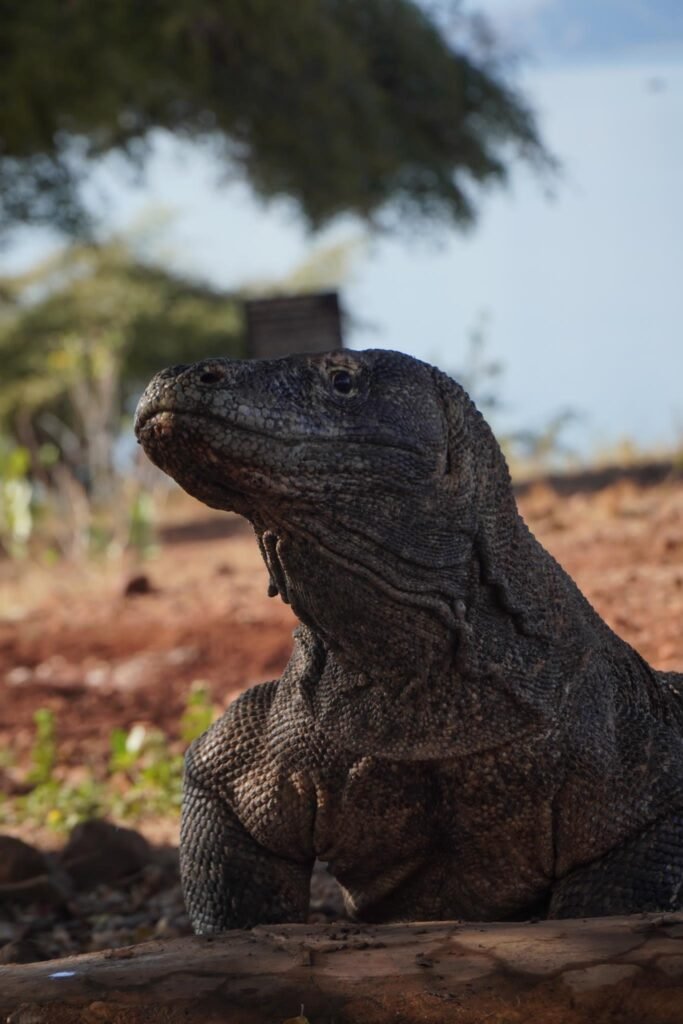
News of the existence of a giant lizard from the age of dinosaurs shocked the entire earth in the early twentieth century, some called it a very large lizard, the last dinosaur, even a living dragon like in eastern legends. The confusion of information then made a Dutch colonial lieutenant named Jacques Karel Henri Van Steyn Van Hensbroek come directly to confirm the truth of the rumors. After seeing it, he then took samples of Komodo skin and several other body parts of the giant lizard and then took them to the New York Botanical Garden which we now know as the Bogor Museum. The sample was studied by Pieter Anthonis Ouwens in 1912. From the results of the study, he published a scientific publication and gave the name varanus komodoensis to Komodo; The last dragon on earth, from the genus varanus, order squamata and family varanidae or large lizards that have existed since the age of dinosaurs in the Cretaceous period (145.66 million years ago).
The discovery of the ancient Komodo dragon that astonished the world of zoology on this 390 square kilometer island then gave birth to a series of new area statuses for its habitat. Starting from the protection of Komodo dragons and Komodo Island by the Dutch colonial government in 1915, the determination of Komodo Island as a wildlife sanctuary through a decree of the Minister of Forestry in 1965, the determination of tourist forests through a decree of the governor for Komodo Island, Padar Island, and Rinca Island in 1969, the determination of the area as a biosphere reserve by UNESCO in 1977, the establishment of Komodo National Park which includes Komodo Island, Rinca Island, Padar Island, Gili Motang and Nusa Kode in 1980, the determination of TNK as a world heritage site by UNESCO in 1991 until in 2011 Komodo Island was included in the list of new 7 wonders of nature.
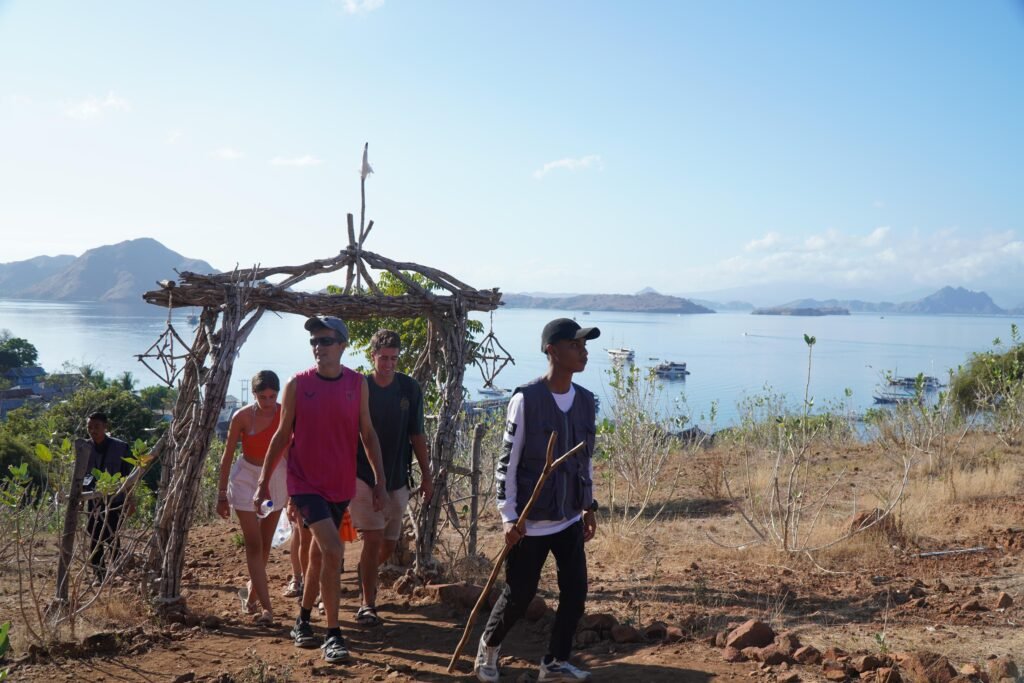
The various regulations above not only aim to show how important it is to preserve and breed Komodo dragons to continue to exist on earth as one of the ancient relics in the world of reptiles, but also emphasize the uniqueness and natural beauty of the other islands included in the Komodo National Park (KNP) area as well as the surrounding islands that support the sustainability of the KNP, which is an ocean that promises satisfaction in the diving experience when you join in the beauty of the underwater, witnessing the diverse flowers of marine biota dancing among the coral reefs that have been preserved by time, as well as the bright colorful landscape of the beaches around the KNP area.
Apart from the great story of the top predator in its habitat, another rarely highlighted allure regarding the Komodo dragon and its habitat is how the “Ata Modo” people live side by side with one of the wild animals with a bite and glands that can be deadly every day, in very close interaction. Because the sight of children on Komodo Island playing happily in the village yard while nearby several Komodo dragons are sunbathing or walking, as well as the sight of mothers nagging while chasing a Komodo dragon that is taking or looking for food in the kitchen of a resident’s house, will be a common fact that can only be found in the Komodo village.
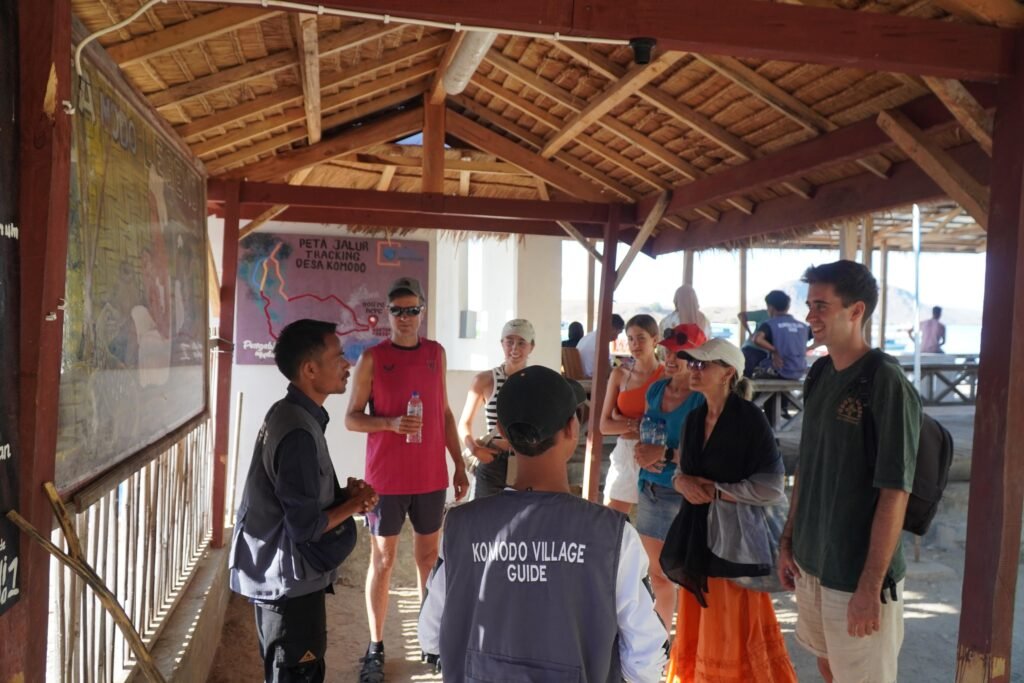
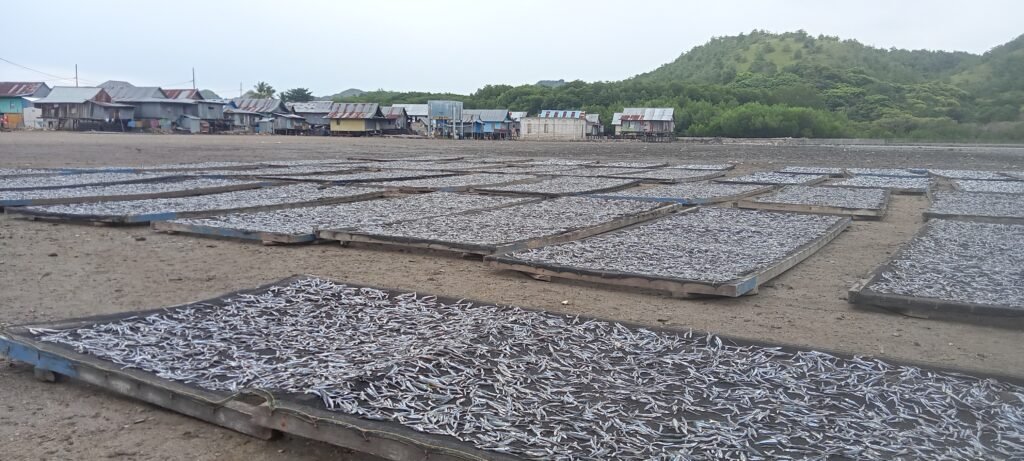
Komodo Village is a settlement inhabited by residents of this island. They have their own language, a blend of the languages of various tribes that have inhabited the island since the first generations of settlers arrived. Komodo language is understood only by fellow Komodo villagers. Komodo Village is the only village on the island, consisting of approximately 800 families with a population of approximately 2,000. They have a variety of skills, from fishing and arts activities to simple farming and also as tour guides.
The legendary belief in the brotherhood of the “Ata Modo” and “Sebae” communities can be found in real moments in the cycle of life on this island from the past to the present. In the past, when many Komodo people were still active hunters, they would share their catch with the Komodo dragons, usually leaving some body parts in the forest as food for their fellow Komodo dragons. Komodo people often spoke to the Komodo dragons in their own language when they encountered them, although it was only a one-way conversation, many Komodo people continued to do so. Even when the Komodo people found a dead Komodo dragon, they would not leave their fellow Komodo dragon to rot on the ground but would dig a hole the size of the sebae’s body and bury it according to the burial method inherited from their ancestors.
Komodo dragons are the strongest identity and character of the “Ata Modo” people. The blood ties in the legend of the dragon princess have become an oath to perpetuate the relationship between the two different creatures on this island so that they live in harmony and care for each other for generations, as long as they are allowed to live according to the history outlined in the “Ata Modo” and “Sebae”. True uniqueness and beauty.
We design our tour to Komodo National Park only for private tours and Komodo village is one of our tour agendas where travelers have the opportunity to see and experience the life of the people and how they live side by side with the dragons. Explore Komodo National Park with us and here is what we can offer for you to Value Your Holiday