
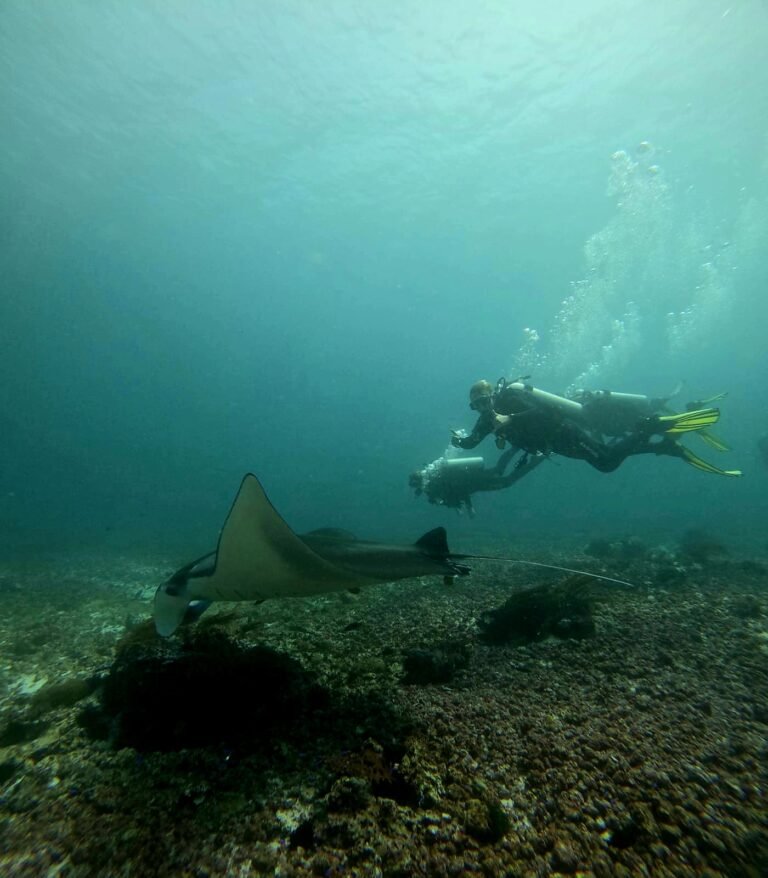
In Komodo dragon sea water, Manta rays are present not only as sea habitats, but as an icon of elegance that animates the pulse of the underwater ecosystem. The Coral Manta Ray (mobula alfredi) and the Ocean Manta Ray (mobula birostris) are two types of manta that live in this sea water.
Between the powerful currents, underwater coral gardens and nutrient rich sea water, these giant-sized creatures float with almost effortless movement as if the ocean is like the sky they fly in. The wingspan of the Ocean Manta can reach 7-9 meters. Meanwhile, coral mantas usually only reach 3-5 meters.
Manta rays have been established as protected animal status, both in the world and in Indonesia. Although it is not yet certain, the total estimated population is more than 18,000 Manta rays in the world, with the largest populations being off the coasts of Peru and Ecuador for the Oceanic Manta Rays which are estimated to number more than 22,000. Approximately 5,000 Coral Manta are in the waters of the Maldives. Meanwhile, in Indonesia there are approximately 3,500 animals dominated by Coral Manta (mobula alfredi) and spread throughout the waters.
In addition to the waters of Raja Ampat (Southwest Papua) and Nusa Penida (Bali), Komodo sea water is known as one of the important habitats for Manta rays in Indonesia. Spots such as Manta Point and Karang Makassar are favorite locations, where they gather to forage and cleanse their bodies of parasites. It is here, in a vortex of currents that never really stand still, manta rays are often seen spinning slowly, opening their mouths wide to swallow plankton carried by the current.
The interaction between manta rays and divers in Komodo sea water presents an unforgettable experience. They show no fear, and often even approach with curiosity. Its wide fin span creates a large shadow underwater, yet its movements remain gentle and serene. This moment brings the realization that humans are just guests in a world that they have inhabited for much longer.
Although they look strong and free, manta rays in Komodo dragons still face threats. Human activities, climate change, and disturbances to habitats are factors that can affect their survival. Therefore, this area is not only a tourist destination, but also a conservation space that continues to be maintained.
Manta rays in Komodo dragon waters are a reminder of the harmony that may be created between the forces of nature and the softness of life. With every movement there is a story of a rich, yet fragile sea, a world that needs more than just admiration, but also protection.
Mantas can be seen year-round in Komodo waters, but the best time is usually in peak season from November to October with the best observation when seeing these seabirds forming plankton-eating formations, both on the surface of the sea and on the seafloor.
Now, it’s your turn to be a part of this sustainable tourism. Here is our mission to explore Komodo National Park on a private phinisi boat. Seeing Manta rays is not only by diving but also you can see them easily by snorkeling.